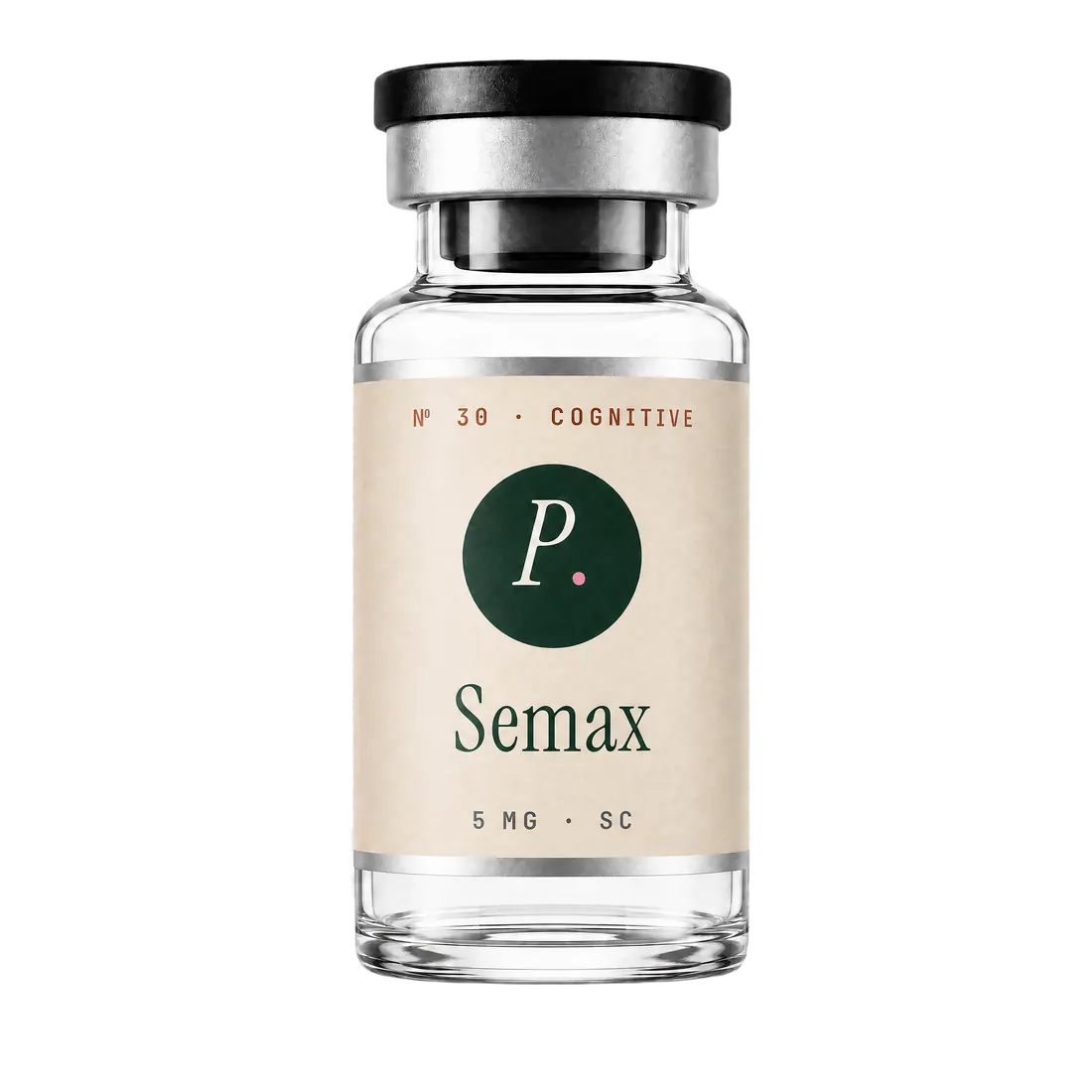
Semax.
ACTH(4–10) analogue — BDNF/NGF upregulation, attention and stress tolerance.
Build your bag, then either book a consultation (an EU-licensed physician reviews your file — anything declined is refunded) or upload an existing Rx at checkout.
- ✓Magistral preparation — Directive 2001/83/EC Art. 5(1).
- ✓Patient-named prescription only — dispensed against a valid Rx.
- ✓EU-GMP Annex 1 Grade A/B cleanroom compounding.
- ✓Cold-chain shipping across EU/EEA — 2–5 working days.
About Semax.
Semax is a 7-amino-acid synthetic analogue of an ACTH(4–10) fragment, developed in the 1980s by Russian neuropharmacologists. It is one of two major peptides (with Selank) in the Russian nootropic peptide tradition.
Russian clinical use includes stroke recovery, optic-nerve injury and cognitive enhancement. Translation to EU/Anglo-Saxon clinical literature is patchy but mechanistic data is well characterised.
Semax binds melanocortin receptors (MC4R) in the brain and rapidly upregulates BDNF and NGF expression in hippocampus and cortex. It also modulates monoaminergic neurotransmission and shows neuroprotective activity in ischemic models.
Intranasal or subcutaneous administration, typically 200–600 mcg per day, in 5–10 day courses.
Your physician sets the prescription. This is descriptive information, not a self-administration guide.
Lyophilised: store at 2–8 °C, protect from light. Once reconstituted: 2–8 °C, use within 30 days. Do not freeze.
- INN / Name
- Semax
- Form
- Lyophilised vial · subcutaneous injection
- Strength
- 5mg vial
- Manufacturing
- EU-GMP Annex 1 · Grade A/B
- Endotoxins
- European Pharmacopoeia 2.6.14 · LAL assay
- Identity & purity
- HPLC + MS · > 98%
- Cold chain
- Validated 2–8 °C, monitored end-to-end
- Regulatory basis
- Directive 2001/83/EC · Article 5(1)
2–5 working days
EU / EEA cold-chain delivery, 2–8 °C monitored end-to-end with digital temperature log. Tracking link sent on dispatch.
Magistral preparation
Patient-named preparation under Directive 2001/83/EC Article 5(1). Dispensed exclusively against a valid EU prescription.
EU prescription recognition
Prescriptions written in one EU member state are recognised in others under Directive 2011/24/EU on cross-border healthcare.